
How to Learn the Forearm Stand
The forearm stand is an inverted balance on your forearms. It builds shoulder stability and a straight, stacked body line, and it is the most accessible way into inverted calisthenics skills before the full handstand.
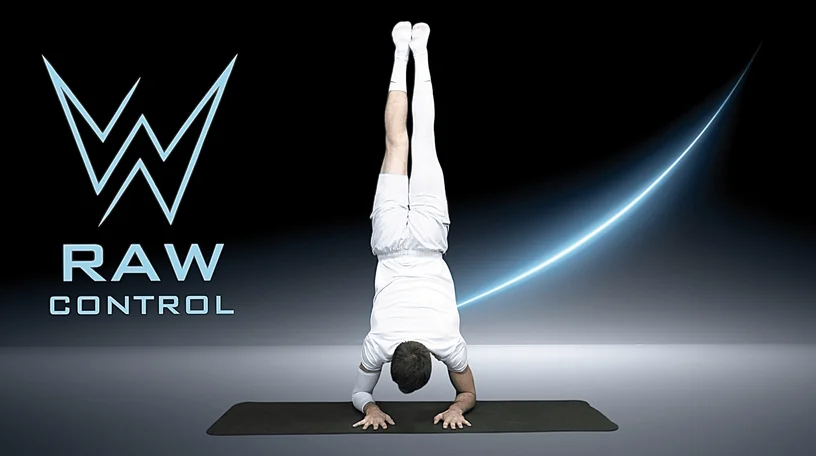
Forearm Stand technique
- Place your forearms on the floor, parallel and shoulder-width apart
- Spread your fingers and press your whole forearms into the floor
- Press the floor away to keep active shoulders
- Bring your feet close before the kick-up
- Kick up with control, not with force
- Stack your shoulders, hips, knees, and ankles in one line
- Brace your core and squeeze your legs together once balanced
- Control your balance with your shoulders and forearms
Key progressions
These are the main building blocks you work on before the Forearm Stand feels solid:
- Dolphin Pose Holds
- Wall-Assisted Kick-Ups
- Chest-To-Wall Forearm Stand Holds
The 3-stage training path
In Raw Control the Forearm Stand is split into Training 1 → 2 → 3. Each stage is a structured session of four exercises:
Training 1
- Forearm Pike To Advanced Forearm Plank
- Face-To-Wall Forearm Stand Hold
- Back-To-Wall Forearm Stand Hold
- Dolphin Push-Up
Training 2
- Single-Leg Forearm Pike To Forearm Plank
- Back-To-Wall Forearm Stand Balance Transition
- Face-To-Wall Forearm Stand Balance Transition
- Back-To-Wall Forearm Bent-Leg Hold
Training 3
- Forearm Pike Hold
- Face-To-Wall Forearm Scissor Kick
- Forearm Stand Max Hold Attempt
- Forearm Scapular Protraction Plank
Exact sets, reps, hold times and rest periods, plus a full-screen HD video for every exercise, are in the app.
Where the Forearm Stand fits
Each skill line runs through all three levels. This is the path for the Forearm Stand:
More beginner skills
Train the Forearm Stand with Raw Control
Every training comes with exact sets, holds and rest times, a full-screen HD coaching video for each exercise, warm-ups and offline downloads.
General fitness information only. Warm up properly, train within your ability and stop if you feel pain. Read the Health & Safety Disclaimer.